Stage 6 — The Wild Kola Nuss
From the spectacular waterfall, we go even further into the deep jungle. The hike is very exhausting, but it is not far anymore. We will soon have reached the wild kola nut trees!

From the spectacular waterfall, we go even further into the deep jungle. The hike is very exhausting, but it is not far anymore. We will soon have reached the wild kola nut trees!

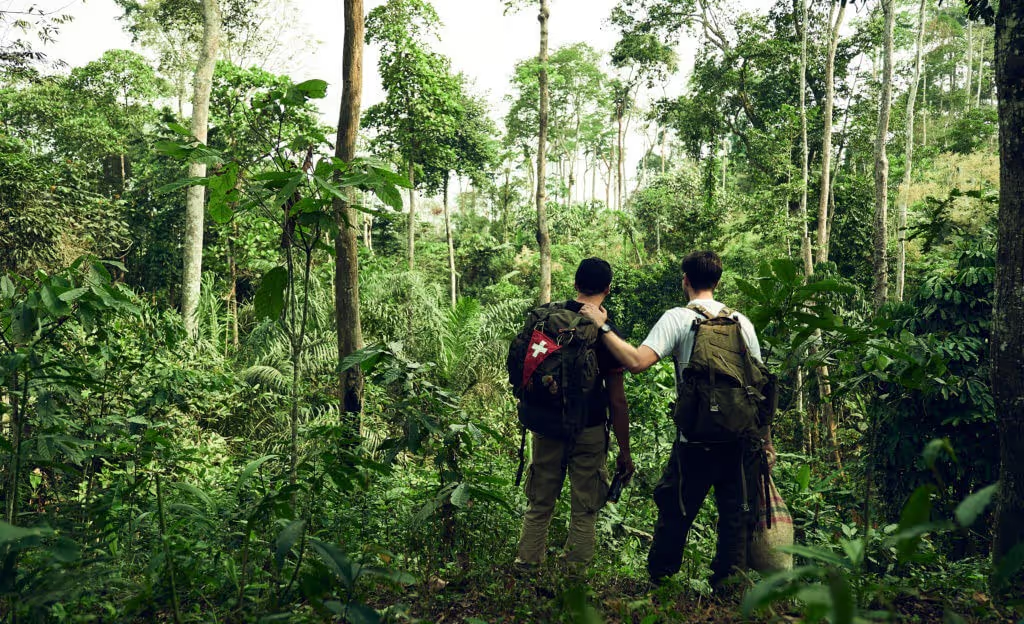
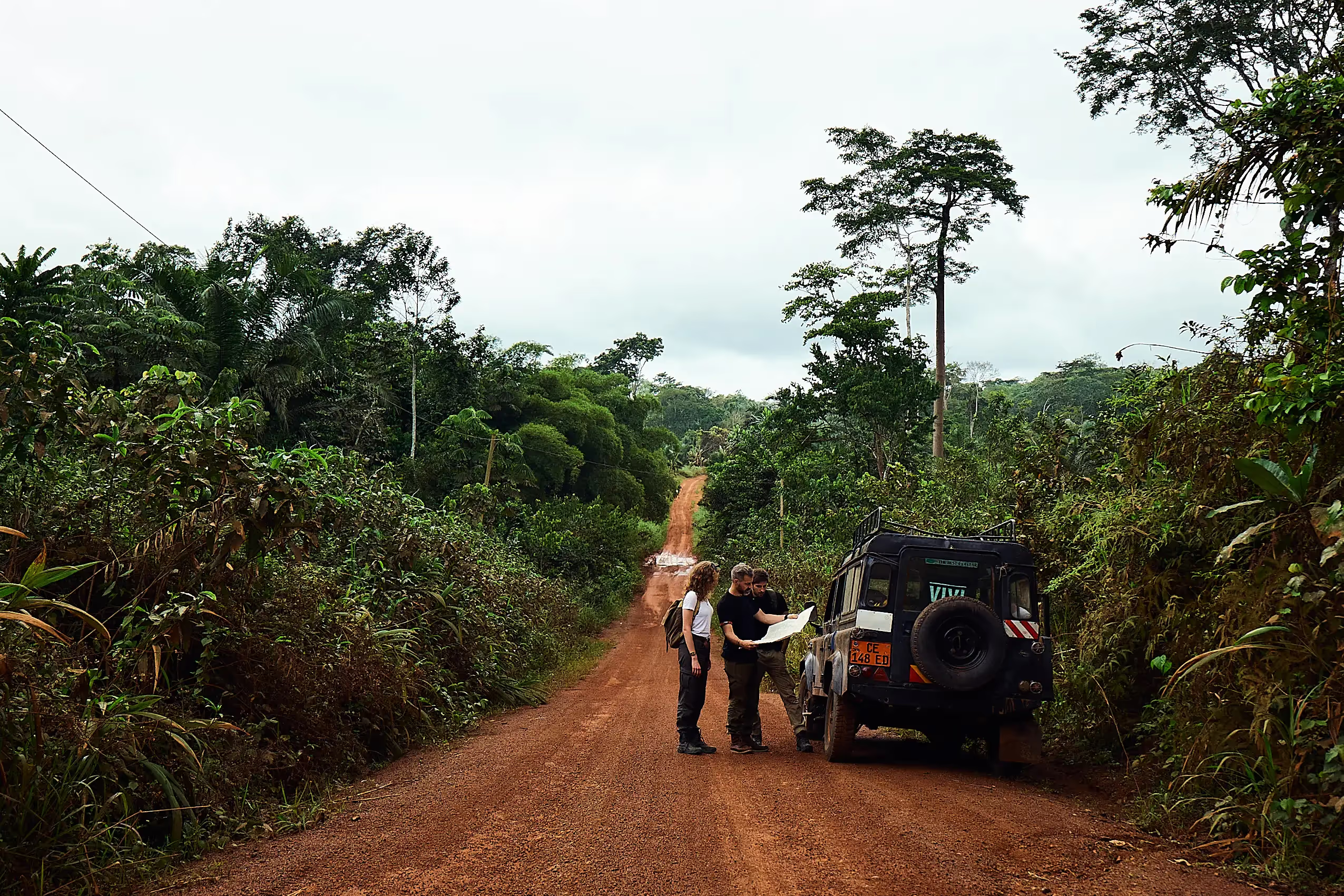
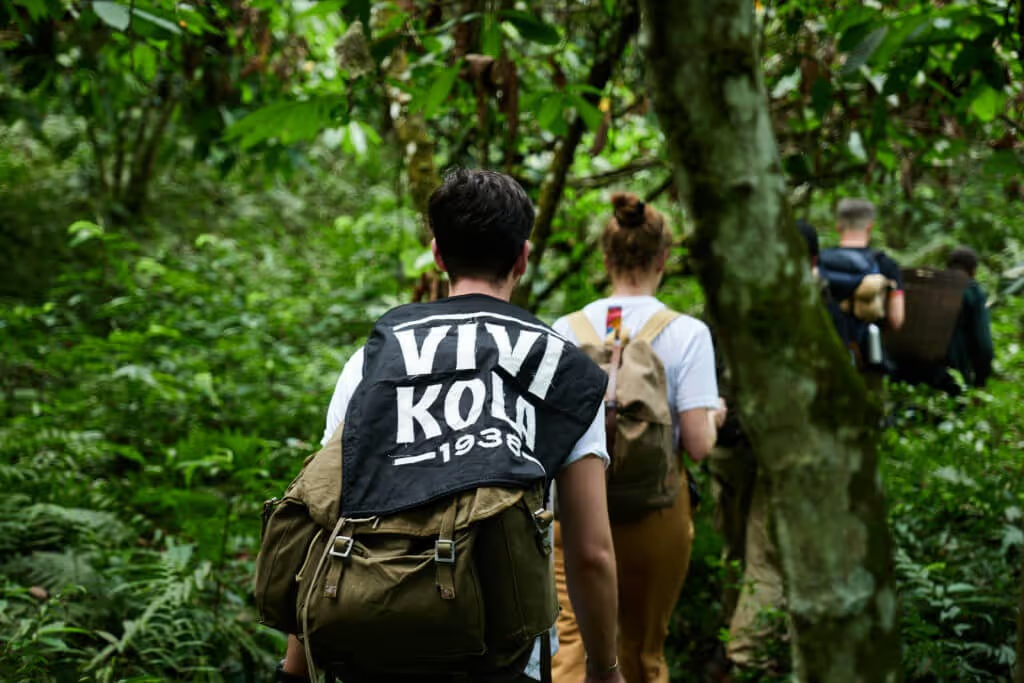
We meet members of the Fairtrade Cooperative, with whom we work together to grow, harvest and transport kola nuts. The Fairtrade cooperative guarantees fair working conditions for local farmers and makes it even possible for us to use the real kola nut flavor for our Vivi Kola. Monsieur Simon is one of the many farmers who are responsible for growing and harvesting kola nuts. He knows the jungle like the back of his hand and shows us the way to the wild kola nut trees. A few other members of the cooperative are accompanying us on our hike. We are in the middle of the wild jungle of Cameroon, the high humidity is bothering us all. The members of the cooperative have a canister with them that is filled with home-brewed palm cider. During the hike, they only drink cider, in the meantime we have already rushed down 2.5 liters of water and ate a pack of student food 😀 The alcohol also has an effect on the mood and our companions sing happily 😀 They definitely suffer less from the heat — maybe we should have had a drink of it 😀 The trail leads past streams that we cross on felled tree trunks. Time passes slowly, the heat is getting stronger and stronger. In the meantime, everyone is trotting behind each other breathing with difficulty. We're not as concentrated anymore and keep tripping over the thick roots on the ground. Monsieur Simon is the only one of the group who still seems fit and cheerful. With his almost 1.65 meters and a twelve-kilo basket of tree branches on his back, he runs ahead at a constant pace. Maybe it's the palm tree brandy that he takes a sip from time to time. We ask him again and again: “Monsieur Simon, how long does it take to get to the kola nut trees? “He wants to motivate us: “Encore vingt minutes” is his answer every time. But now we've been on the road in full gear for almost 4 ½ hours. There is not a kola nut tree in sight far and wide...
After several hours, we pass small clay houses, some of which are very crooked on wooden pillars. Monsieur Simon explains to us that these houses are sleeping places for farmers during the harvest. They are furnished with a mattress and a small cooking area. He goes on to say that in addition to kola nuts, they also harvest cocoa beans in the jungle.
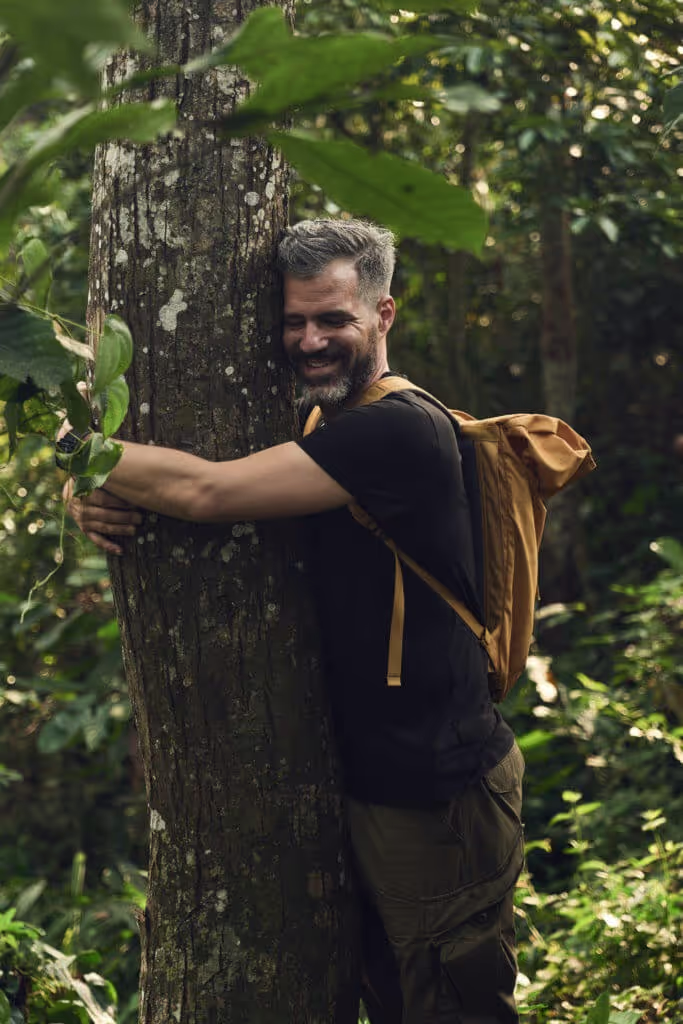
And suddenly he's there! The first kola nut tree! Christian is beaming all over his face and hugs the first wild kola nut tree with joy. A childhood dream comes true 😀 We have finally reached the goal of our adventurous expedition and found the origin of the wild kola nut. The trees are several meters high and the trunk is relatively narrow. High up, we see the green treetop with the kola nuts. Monsieur Simon explains a few facts to us: The individual kola nuts are embedded in a green fruit that is about the size of a woman's hand. The shell is virtually used to protect the nuts. In addition, kola fruits are not harvested from trees, as it is far too dangerous to climb up the tall trunks. Instead, they wait until the ripe fruits fall off by themselves and then collect them. Under the tree, we also promptly find a few kola fruits. We pick them up together and fill the jute bag with them.
The kola nut is mainly found in West and Central African countries. They ripen in a so-called follicle, which consists of a dry, thick pericarp. These green follicles are egg-shaped and between eight to ten seeds are embedded inside the fruit. An inconspicuous white skin envelops the cores. When you remove this skin, purple-colored nuts appear underneath. Kola nuts are a common stimulant in Africa. The slightly bitter, earthy tasting nuts are chewed for a while and then spit out again. The kola nut also has a stimulating effect due to its high caffeine content. In many African cultures, kola nuts have particular cultural significance. For example, it is common in some ethnic groups to give kola nuts as gifts to guests. They are considered a symbol of hospitality. In some places, the bridegroom gives the bride's parents a basket of kola nuts before the wedding. We watch in fascination as one of the farmers cleverly opens the fruit and removes the white skin from the seeds. It gives us all a core to try. The nut is still very crunchy and tastes bitter. We unpack a few Vivi Kola bottles and tell them that it is only thanks to their work that we can even use the real kola nuts in Vivi Kola. We then toast with everyone with a Vivi Kola. They take a big sip and nod: passed the taste test 😀
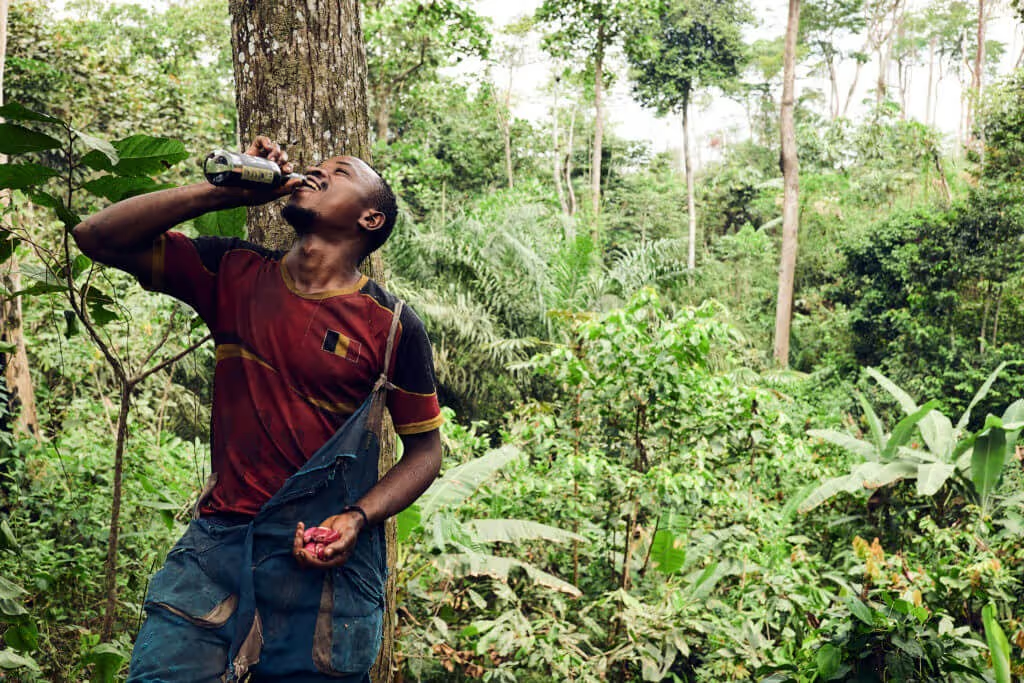
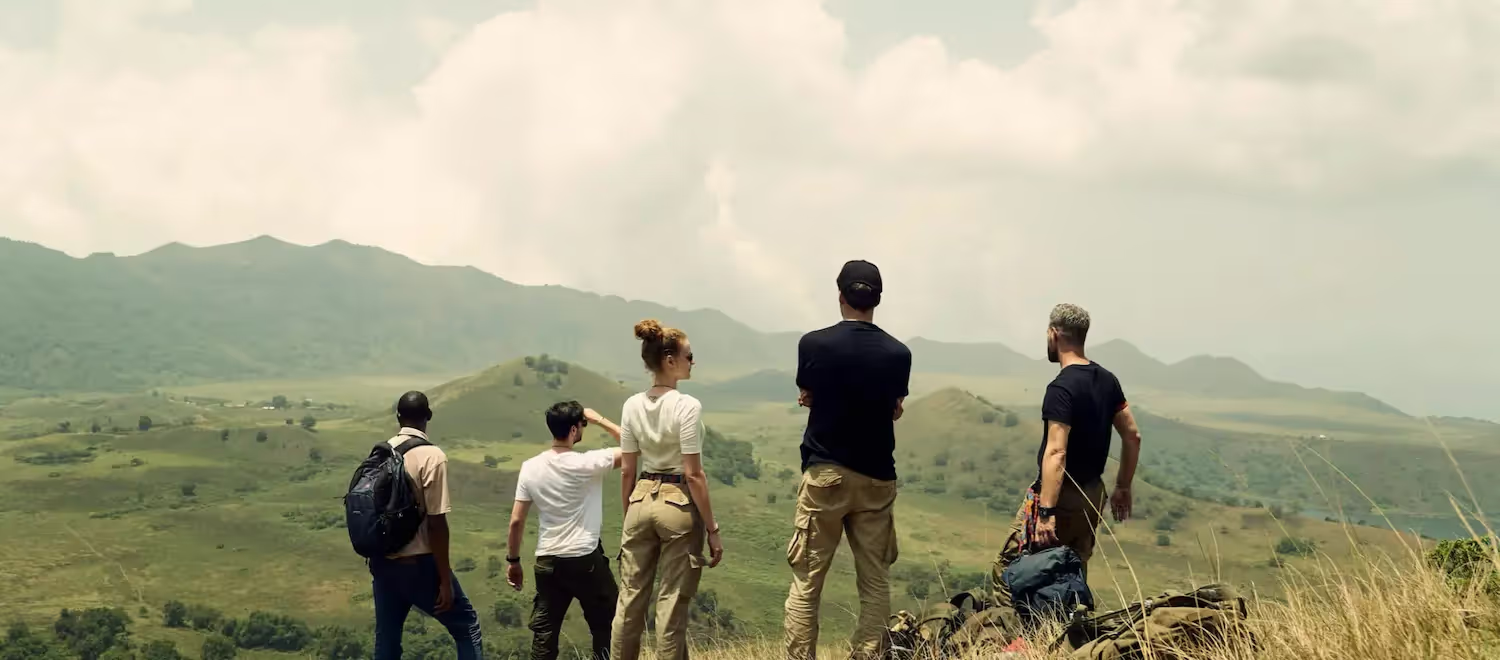
Completely satisfied and with the wild kola nuts in our luggage, we head back. We still have a few hours of march before we return to civilization. In the meantime, we have already traveled so many kilometers on foot that we don't even feel the sore muscles anymore. But the last two hours are tough. With heavy feet and sweaty faces, we're fighting the last few kilometers. However, we can't take a breather anymore, otherwise we won't be able to make it out of the deep jungle before sunset. For the sugar boost, we empty the last Vivi Kolas and can reduce the weight of our backpacks at the same time. With quick steps, we reach the exit of the jungle at sunset. We are relieved and overjoyed that we have completed this adventurous journey successfully and without further complications. We hiked through the deep jungle, crossed the big river with dugout boats, climbed a volcano at 2000 m above sea level, descended to the foot of an eighty meter high waterfall and were finally able to find the origin of the wild kola nut. We are grateful that we had the opportunity to get to know the multi-faceted Cameroon better. With all the wonderful impressions and experiences, we travel back to Switzerland.